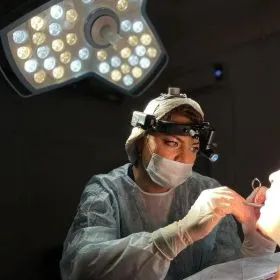
Gynecologist Irina Khanikalova. Abortion. Everything about abortion. 
Photos
Gynecologist Irina Khanikalova
Makhachkala welcomes you!
Everything about abortion.
Let's start the topic with the question of “the harm of abortion and its complications.”
Let's find out what abortion is?
How is it going?
When to apply and its consequences.
What types of abortions do we know:
• Spontaneous abortion popularly called
“miscarriage” (reason, death of the fetus);
• Medical abortion:
– using tablets;
– instrumental, this is curettage (Curettage -
separation by scraping from the walls of the uterus with a curette);
– vacuum aspiration, this is the suction of the contents of the uterus using a tube of the required diameter (depending on the period)
6 weeks – number 6, 10 weeks – number 10, etc.
Vacuum aspiration is considered the most gentle,
since a negative is created in the uterine cavity
the pressure and contents go into the tube.

How is a vacuum abortion performed?
A woman on the phone can get
preliminary recommendations, depending on the stage of pregnancy, whether there was a previous cesarean section or not,
the thickness of the scar on the uterine mesh, are there any mines or not?
The vacuum abortion itself is carried out, so the drug “deprivon” is injected into a vein, the patient falls asleep for 10 minutes, only after falling asleep is the condition, bends, size of the uterus determined by palpation,
then the channel is expanded and aspiration is performed, i.e.
suction of the contents, all in 10 minutes.
Then you wake up in the room, sleep for an hour,
gets a doctor's order and leaves.
At home you follow all the doctor’s prescriptions and after 7 days
Ultrasound control is done, follow all appointments for 5 days.
According to statistics in Russia, out of 100%, 20%
women have complications such as:
• leftovers;
• inflammation;
• infertility.
We are talking about a surgical method,
scraping - curettage.
Vacuum and medical abortions have
much less complications.
I perform short-term pregnancy termination.
Vacuum abortion does not injure the uterine cavity,
those women who have a negative Rh factor
Only vacuum, non-surgical is strictly indicated.
But also medical abortion
has contraindications:
• C-section;
• myoma;
• diabetes;
• epilepsy;
• asthma.
A woman can get pregnant on the 14th
day of the cycle with some complications.
There are methods for determining this day.
Fertilization occurs in the fallopian tube
and only on days 6-7 the embryo enters the uterine cavity.
To have a vacuum abortion, you must wait
6 days after the start of the delay and do an ultrasound.
It is necessary to make sure that the fertilized egg is in the uterine cavity,
and this cannot be done before 6 days.

Only after determination by ultrasound
presence of pregnancy in the uterine cavity
You can use one of three methods:
• Surgical method of expanding the cervical canal.
• Vacuum:
contents in the uterus are absorbed by tubes
of different diameters, from 3 to 12 weeks.
• Medication method.
up to 42 days from the day of delay.
• Vacuum aspiration of the uterine cavity
carried out with complete anesthesia.
I recommend making a decision to terminate
discussing pregnancy with my husband!
Although a woman according to Russian law
has the right to make decisions independently.
Gynecologist Irina Khanikalova -
specialist with 35 years of work experience,
will help in solving your problem
any complexity:
• installation and removal of the spiral;
• prescription of contraceptives;
• treatment and rehabilitation of post-abortion complications;
• reduction of the labia minora;
• hymenoplasty (hymen restoration);
• labiaplasty.

We will choose a time convenient for you!
All issues discussed with the patient
absolutely anonymous! To make an appointment please call in advance. Ask questions
on any topic that interests you!
Makhachkala welcomes you!
Everything about abortion.
Let's start the topic with the question of “the harm of abortion and its complications.”
Let's find out what abortion is?
How is it going?
When to apply and its consequences.
What types of abortions do we know:
• Spontaneous abortion popularly called
“miscarriage” (reason, death of the fetus);
• Medical abortion:
– using tablets;
– instrumental, this is curettage (Curettage -
separation by scraping from the walls of the uterus with a curette);
– vacuum aspiration, this is the suction of the contents of the uterus using a tube of the required diameter (depending on the period)
6 weeks – number 6, 10 weeks – number 10, etc.
Vacuum aspiration is considered the most gentle,
since a negative is created in the uterine cavity
the pressure and contents go into the tube.
How is a vacuum abortion performed?
A woman on the phone can get
preliminary recommendations, depending on the stage of pregnancy, whether there was a previous cesarean section or not,
the thickness of the scar on the uterine mesh, are there any mines or not?
The vacuum abortion itself is carried out, so the drug “deprivon” is injected into a vein, the patient falls asleep for 10 minutes, only after falling asleep is the condition, bends, size of the uterus determined by palpation,
then the channel is expanded and aspiration is performed, i.e.
suction of the contents, all in 10 minutes.
Then you wake up in the room, sleep for an hour,
gets a doctor's order and leaves.
At home you follow all the doctor’s prescriptions and after 7 days
Ultrasound control is done, follow all appointments for 5 days.
According to statistics in Russia, out of 100%, 20%
women have complications such as:
• leftovers;
• inflammation;
• infertility.
We are talking about a surgical method,
scraping - curettage.
Vacuum and medical abortions have
much less complications.
I perform short-term pregnancy termination.
Vacuum abortion does not injure the uterine cavity,
those women who have a negative Rh factor
Only vacuum, non-surgical is strictly indicated.
But also medical abortion
has contraindications:
• C-section;
• myoma;
• diabetes;
• epilepsy;
• asthma.
A woman can get pregnant on the 14th
day of the cycle with some complications.
There are methods for determining this day.
Fertilization occurs in the fallopian tube
and only on days 6-7 the embryo enters the uterine cavity.
To have a vacuum abortion, you must wait
6 days after the start of the delay and do an ultrasound.
It is necessary to make sure that the fertilized egg is in the uterine cavity,
and this cannot be done before 6 days.
Only after determination by ultrasound
presence of pregnancy in the uterine cavity
You can use one of three methods:
• Surgical method of expanding the cervical canal.
• Vacuum:
contents in the uterus are absorbed by tubes
of different diameters, from 3 to 12 weeks.
• Medication method.
up to 42 days from the day of delay.
• Vacuum aspiration of the uterine cavity
carried out with complete anesthesia.
I recommend making a decision to terminate
discussing pregnancy with my husband!
Although a woman according to Russian law
has the right to make decisions independently.
Gynecologist Irina Khanikalova -
specialist with 35 years of work experience,
will help in solving your problem
any complexity:
• installation and removal of the spiral;
• prescription of contraceptives;
• treatment and rehabilitation of post-abortion complications;
• reduction of the labia minora;
• hymenoplasty (hymen restoration);
• labiaplasty.
We will choose a time convenient for you!
All issues discussed with the patient
absolutely anonymous! To make an appointment please call in advance. Ask questions
on any topic that interests you!
This video could not be played in the browser. Try MP4 (H.264) or WebM format.